

- April 5, 2026
- compliance
- 0
Top 5 Labour Law Changes Every Employer Must Know
Staying updated with labour laws is essential for every business, especially in a rapidly evolving regulatory environment. Top 5 Labour Law Changes Every Employer Must Know will help you understand the most important updates that can directly impact your compliance, payroll, and employee management. Whether you run a startup or an established company, these changes are crucial to avoid penalties and maintain smooth operations.
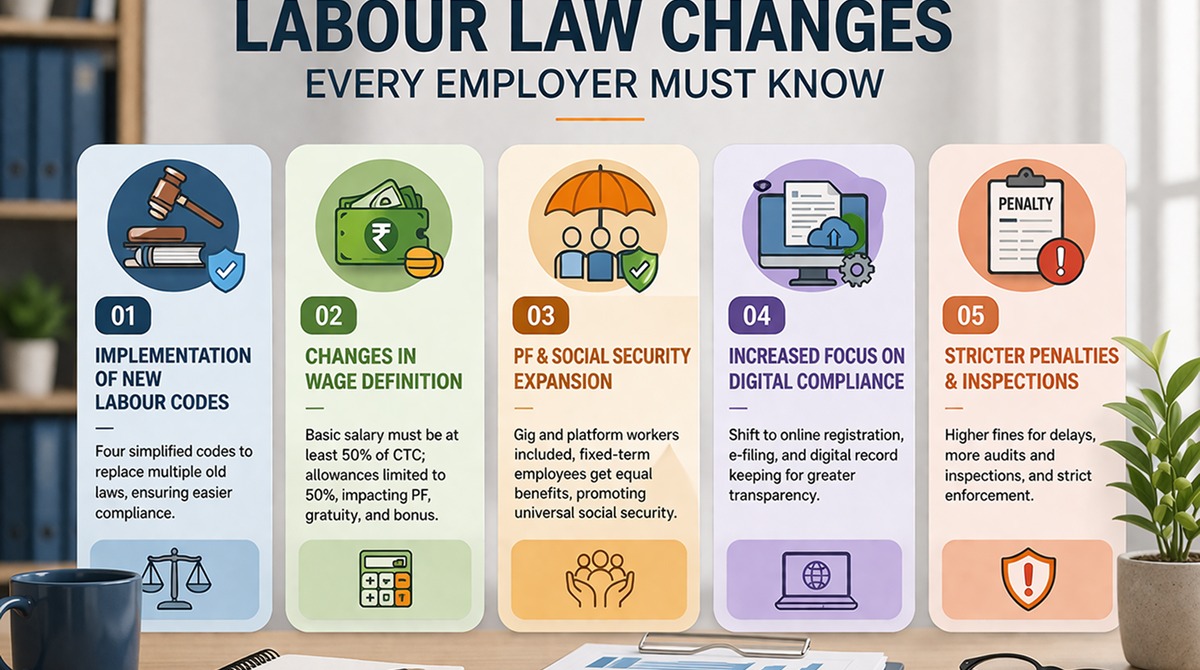
1. Implementation of New Labour Codes
The Indian government has introduced four consolidated labour codes:
- Code on Wages
- Industrial Relations Code
- Social Security Code
- Occupational Safety, Health and Working Conditions Code
These codes simplify multiple old laws into a structured framework. Employers must prepare for changes in wage definitions, working conditions, and compliance processes. The new wage structure may also impact PF contributions and salary breakdowns.
2. Changes in Wage Definition
One of the most significant updates is the revised definition of “wages.”
- Basic salary must be at least 50% of total CTC
- Allowances cannot exceed 50%
- PF, gratuity, and bonus calculations will be affected
This means employers may need to restructure employee salaries, which could increase PF contributions and overall compliance costs.
3. PF & Social Security Expansion
The Social Security Code aims to extend benefits to more workers:
- Gig workers and platform workers are now included
- Fixed-term employees get benefits similar to permanent employees
- Increased focus on universal social security
Employers working with freelancers or contract workers may need to revisit their compliance strategy.
4. Increased Focus on Digital Compliance
The government is moving towards digital and transparent systems:
- Online registration and unified portals
- Electronic returns and filings
- Digital record maintenance
This reduces paperwork but requires businesses to adopt proper systems and tools for compliance management.
5. Stricter Penalties & Inspections
Non-compliance is becoming more costly:
- Higher penalties for delayed filings
- Increased inspections and audits
- Strict enforcement of labour laws
Employers must adopt a proactive approach to avoid legal risks and financial losses.
Conclusion
Understanding these Top 5 Labour Law Changes Every Employer Must Know is critical for running a compliant and efficient business. As regulations evolve, employers must stay proactive, update their systems, and ensure proper documentation. A structured compliance strategy not only protects your business but also builds trust with employees and authorities.